A Patch Three Pack
$20
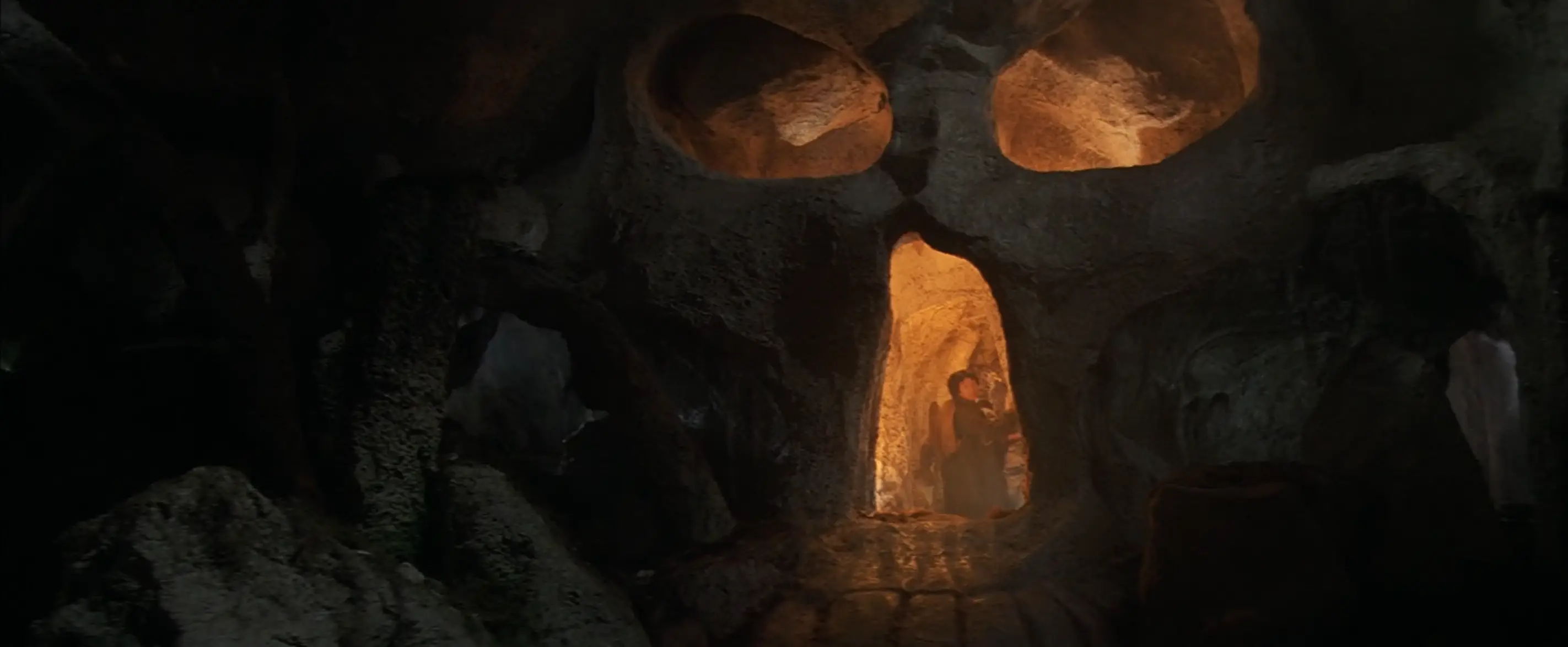
Caves and traps and peril.
Foundational Texts is a monthly essay series for 2026 looking at some of the culture that shaped me and how it still resonates today.
Read all the installments: January: Jenny Holzer | February: The Goonies | March: The Channel 5 News Team
It is cold and it is wet and it is dark. Dark the way every cave is in your dreams, which is to say not dark at all but lit in blues and golds, the way it would never be in actuality but, for this story, it is. Because it is a good story, an adventure story, told through caves and traps and peril.
You are there with your friends, deep underground, under the town you were born in but not the town you'll grow up in because, tomorrow, you will be moving, all of you, because your parents didn't have the means to compete against the wealth and power that wants to turn your homes into rubble. That's why you're here, in the wet and the dark that isn't dark, and that's why you've almost died a half-dozen times due to the peril and the traps. You're here because you still have hope.
Hope has lead you here because you are a child and you still believe in miracles, still believe the impossible is possible, and so you have followed a map—a pirate map, the best kind—here, to this point, this cave, this very moment, and you are caked in mud and you are freezing cold and you are scared—but because you are on the verge of being an adult you will not say you are scared—and it is here, now, that you are faced with a choice.
This cave offers a retreat in the form of a bucket tethered back in reality, back in the above-ground, back home but not home for long. The bucket hangs below the opening to the town wishing well, the wet floor you stand on is covered with coins—wishes, including yours, that never came true. And that bucket offers a choice: freedom from the peril and uncertainties of the map and its traps, yes, but also a return to a home that will soon not be yours and to a life that feels even more uncertain than the near-death of the below.
And yet you are young and you are scared and you know that the right thing is to retreat and you have done the right thing your whole life and your friends are cold and hungry and scared and it would be best if you all gave up on the dream, gave up on the possibility of miracles, and rode the bucket out of the caves and out of the town and out of the only lives you've ever known. But you hesitate, because while that might be the smart path it's not the right path, not while there's still hope. And so, before the bucket raises and the first of your friends ascends, you speak.
You say a lot of things, desperate and pleading, your voice cracking from equal parts desperation and puberty, but what I remember most—what I have remembered forever—is when you said this: Our parents, they want the best of stuff for us, but right now, they've got to do what's right for them. Because it's their time, up there. But down here, it's our time. It's our time down here.
I was lonely the summer of 1985. Lonely and scared. I was ten years old and going through a period where I was frightened of everything: of killers breaking into our house, of food being poisoned, of creatures in books coming alive. It was a time that I mostly remember as one that felt like every turn could be a wrong one. I felt very alone, at an age where my grade school friends and I were growing apart, and where I felt like I didn't fit in with anyone else. My parents were both working, and so my days were mostly spent solitary, alone with thoughts that weren't helping.
I needed something to turn down the fears in my brain and so I went to the movies so many times that summer. I was old enough to ride my bike across town to the movie theater, both parents at work, a kids matinee ticket was two bucks. I'm sure I saw other movies, but mostly I saw The Goonies.
I'm not going to summarize the plot of The Goonies for you. You've had decades to watch it and either you did or you didn't at this point (and honestly rewatching today, you're going to be struck by the casual racism and cruelty of the 1980s as much as anything), but I am going to say that everything about that movie, at ten, felt like it was just for me. The sense of adventure, the fearlessness, the joy, everything. I was especially enamored with Ke Huy Quan's kid inventor Data and actually wept a few years ago when he finally received his flowers for Everything Everywhere All At Once. But mostly, it was the scene under the wishing well and the sense that there was a place, separate from the real world, where anything was possible, where it could be your time, your time to spend chasing an impossible dream.
I was lonely and scared that summer and not sure where I fit, or how I fit, or if I fit, and here was a voice telling me that there was a place for me after all, but it wasn't above ground. It was down underneath it all, where the surface ends and your life begins.
You can trace a very clear line from that summer of being scared and sad and loney and watching The Goonies over and over to punk. The underground that I discovered a few years later—probably four or five in actual years but it feels like far more separation than that—was exactly that: a place where you could exist separate from the conformity of the mainstream, where you could chart your own existence, where you could build possibilities that felt impossible and possible simultaneously, and where you could do it alongside others who had found themselves—their true selves—in the liner notes of 7"s and smudgy printing of zines and sticky floors of a Sunday afternoon show in a rock club that smelled of old beer and sweat. Down there, it was our time.
Even today—especially today, as we wake up to news of bombs falling in the Middle East yet again—this is still true. Because we know how this story goes in the mainstream: politicians will line up behind the cudgel of "supporting our troops," news channels will craft theme music, yellow ribbons will go on trees, and those that to try and stop the carnage, that question the premise of the whole endeavor, will be labeled traitors or fools or ignored entirely. You have probably lived through a few of these wars yourself, so you already know how this familiar playbook will play out up there.
But down here?
If the last year has taught us anything, it's that as the world above-ground falters the underground has never felt more vital and more alive. The decentralized networks of mutual aid and rapid response that have lit up across the country in response to ICE raids have grown robust. Everywhere you look there are regular people, many who have never ventured underground before, stepping up to deliver food and cover rent and keep watch. The organizing underground that has happened so rapidly and so thoroughly is extraordinary.
Today a new challenge has emerged in the form of an illegal, unjust war against Iran. And while the contours feel familiar, it has never felt like we are more prepared to meet the challenge—not up there where the refrain of Lee Greenwood's "God Bless the USA" is already playing, but down here, where we've already traversed the wet and the mud and the traps and the peril. Down here where the caves are lit like our dreams, down here where—despite everything—hope is still possible, down here where we might be scared but don't want to show it, down here where a voice says that we still have a choice, down here were a voice reminds us:
Down here, it's our time.
Published February 28, 2026. |
Have new posts sent directly to your email by subscribing to the newsletter version of this blog. No charge, no spam, just good times.
Or you can always subscribe via RSS or follow me on Mastodon or Bluesky where new posts are automatically posted.
Foundational Texts: Raised by the Channel Five News Team
The third installment in the monthly Foundational Texts series looks at the iconic 1980s Channel 5 News Team, and the things they taught me when I was young and now that I am old.
Posted on Mar 31, 2026
Porous Barriers That Divide Then From Now
I came to Muncie, Indiana this week for this moment: March 24th, the night that George Dale's life changed forever. Even 104 years later, the reverberations of history stay close.
Posted on Mar 24, 2026
Record for tomorrow the stories that today's victors would prefer we forget
The second installment in the monthly Foundational Texts series looks at the message I took from The Goonies when I was ten and is still just as relevant today.
Posted on Mar 15, 2026